Verified: as operated in 2022, the site generation before nCMS; config files as deployed then. Motivation and story: blog post The (almost) perfect website – concept.
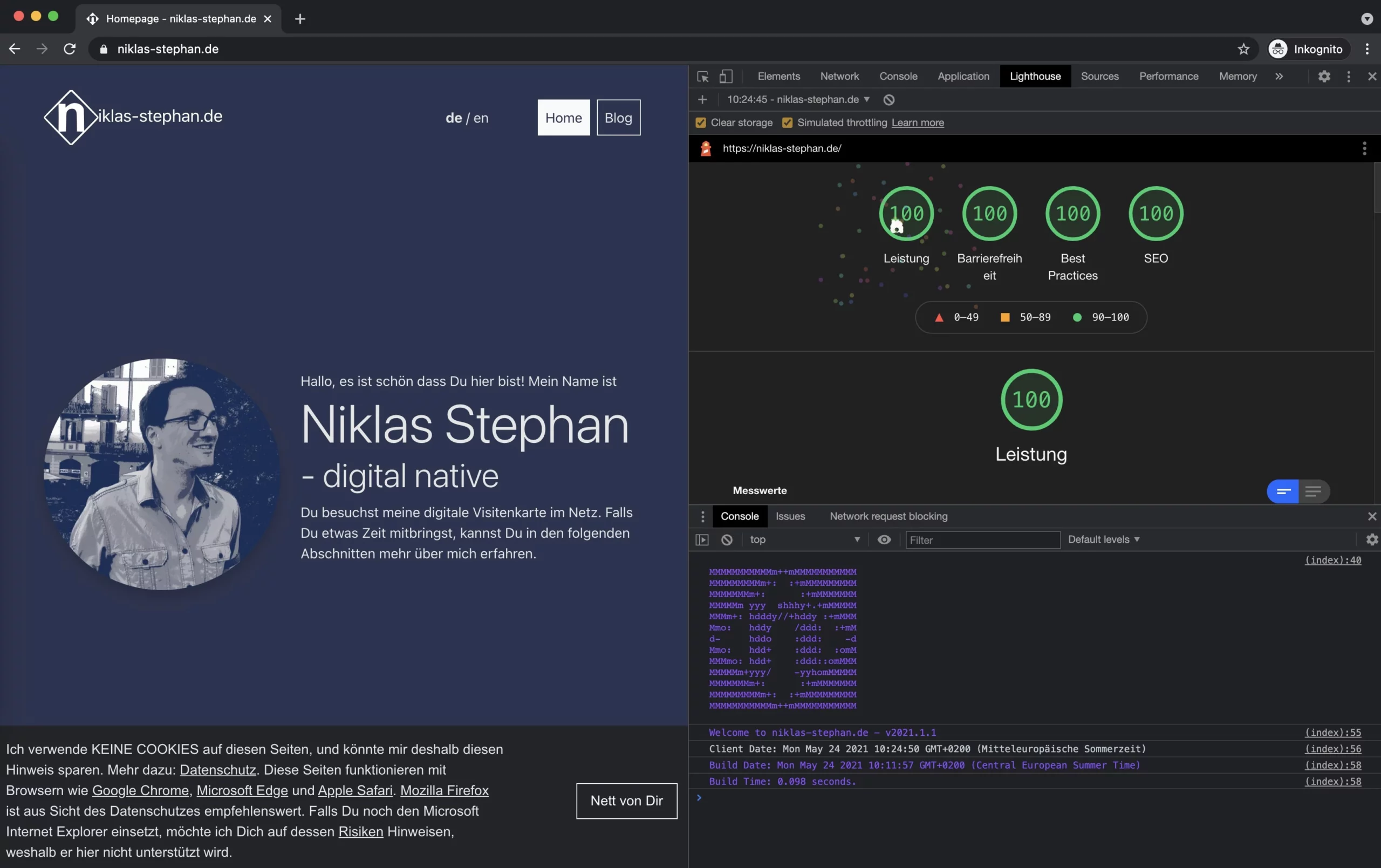
Architecture of the headless-CMS site generation stage of niklas-stephan.de: Agentejo Cockpit (headless CMS) for content, Node-RED for the static build, served from a RAM disk.
Tool stack
- Cockpit (Agentejo) – WCMS with clean back/frontend separation, media management and an integrated HTTP API; webhooks trigger builds.
- Node-RED – build pipeline (not used as IoT here, the flow engine is what matters).
- Bootstrap 5 – frontend skeleton; no jQuery, vanilla JS.
- VS Code – editing of templates, CSS, JS; git for versioning.
- Supporting services: Nginx Reverse Proxy Manager, Let's Encrypt, Matomo, Docker/Docker-Compose.
Content model and pipeline
Static HTML content is stored in Cockpit singletons (with attributes such as language and version); posts live in a collection, so one Cockpit instance can serve many sites. Images are managed in Cockpit with automatic thumbnails. The site is generated on demand:
- Start of the deployment manually or via webhook (Cockpit fires a webhook on save).
- Collect all static sources.
- Collect all existing singletons and posts.
- Dynamic generation of meta data.
- Rendering of the individual pages.
- Saving the pages on disk and in memory.
Generated files land in /dev/shm (RAM disk); the reverse proxy serves from there – no CDN was needed. The full build took 0.099 s on a shared server.
Compose: Cockpit
services:
  cms-db:
    image: 'mongo:latest'
    restart: always
    volumes:
    - './db:/data/db'
    networks:
    - default
    logging:
      options:
        max-size: "10m"
        max-file: "3"
  cms:
    image: agentejo/cockpit
    restart: always
    volumes:
      - './cms/config.php:/var/www/html/config/config.php'
      - './cms/defines.php:/var/www/html/config/defines.php'
      - './storage:/var/www/html/storage'
    environment:
        COCKPIT_SESSION_NAME: SESSION
        COCKPIT_SALT: SALT
        COCKPIT_DATABASE_SERVER: 'mongodb://cms-db:27017'
        COCKPIT_DATABASE_NAME: DBNAME
    depends_on:
    - cms-db
    ports:
    - "8080:80"
    networks:
    - default
    logging:
      options:
        max-size: "10m"
        max-file: "3"
volumes:
  mongo-vol: null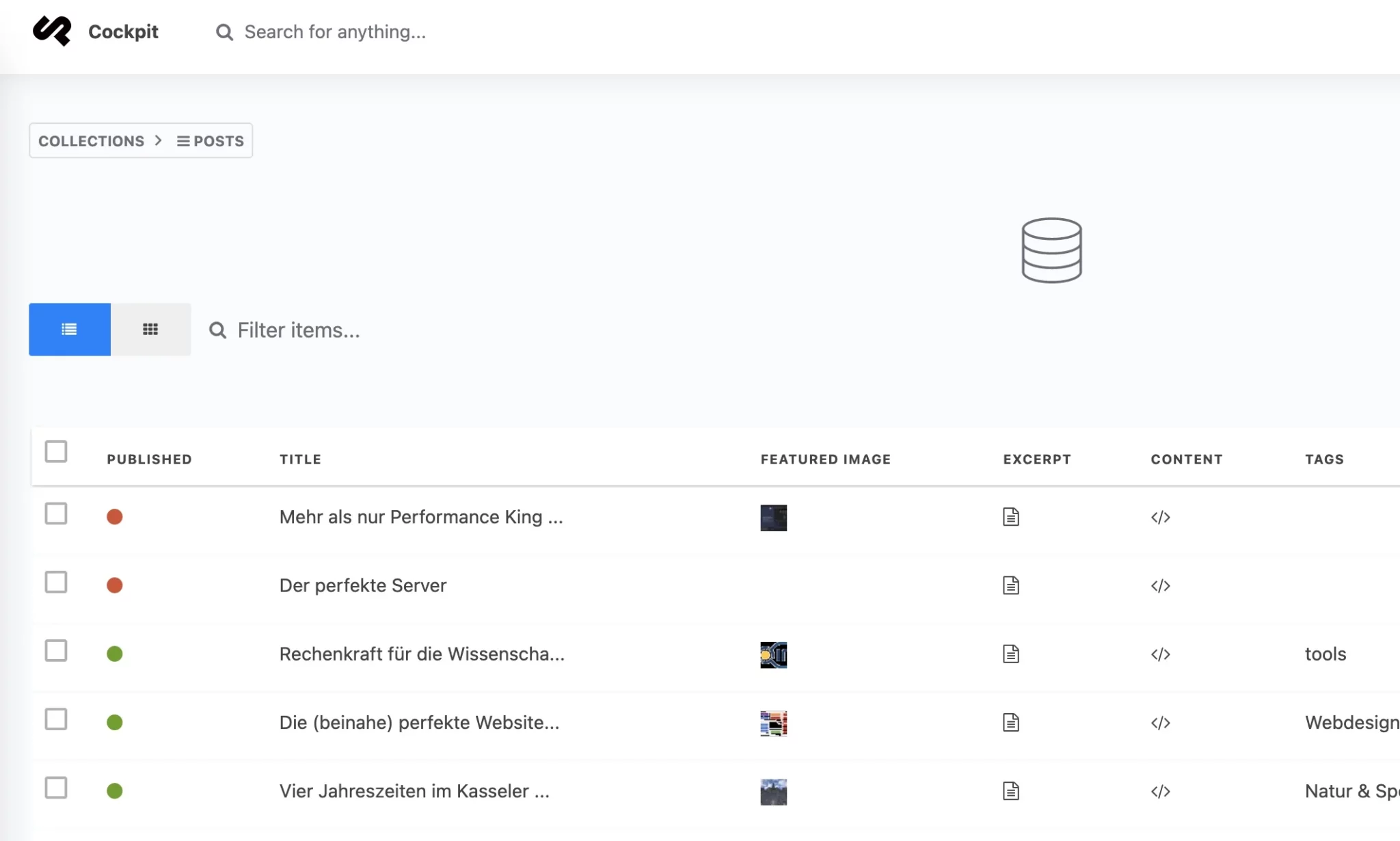
Compose: Node-RED build pipeline
services:
  node-red:
    image: nodered/node-red:latest
    restart: always
    environment:
      - TZ=Europe/Berlin
    ports:
      - "1880:1880"
    networks:
      - default
    logging:
      options:
        max-size: "10m"
        max-file: "3"
    volumes:
      - ./data:/data
      - ./templates:/templates
      - ./static:/static
      - /etc/localtime:/etc/localtime:ro
      - /dev/shm/nsde:/ramdisk
      - ./development:/development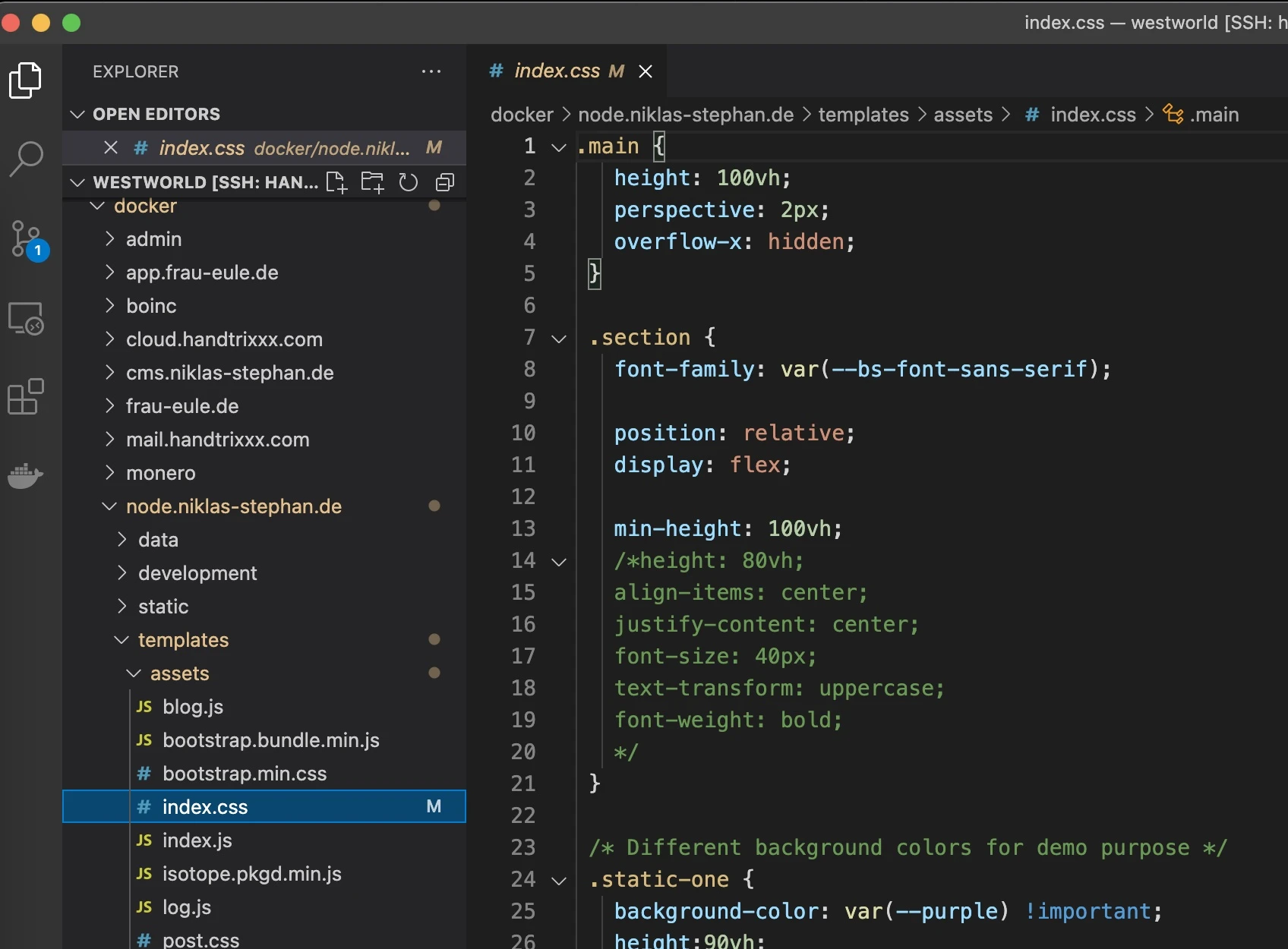
Successors
This stage was replaced by ncms (own Node-RED flat-file CMS, 2022–2024), and that by the current Grav stack (see the website relaunch post).